
Mesoscale convective system (MCS)-organized convective storms with a size of ~100 km have increased in frequency and intensity in the USA over the past 35 years, causing fatalities and economic losses. However, their poor representation in traditional climate models hampers the understanding of their change in the future. Here, a North American-scale convection-permitting model which is... Continue Reading →
Deep oceans may acidify faster than anticipated due to global warming
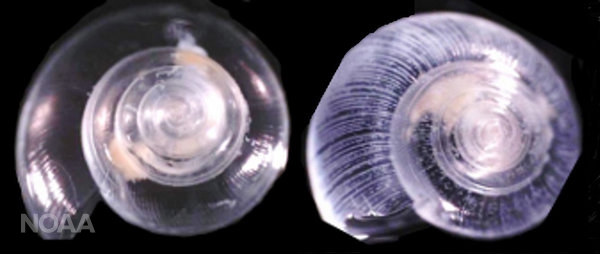
Oceans worldwide are undergoing acidification due to the penetration of anthropogenic CO2 from the atmosphere. The rate of acidification generally diminishes with increasing depth. Yet, slowing down of the thermohaline circulation due to global warming could reduce the pH in the deep oceans, as more organic material would decompose with a longer residence time. To... Continue Reading →
Highlights of the findings of the U.S. global change research program climate science special report

This executive summary presents the Fourth National Climate Assessment (NCA4), an authoritative assessment of the science of climate change, with a focus on the United States. This represents the first of two volumes of the Fourth National Climate Assessment, mandated by the Global Change Research Act of 1990. https://science2017.globalchange.gov/chapter/executive-summary/
Tropical explosive volcanic eruptions can trigger El Niño by cooling tropical Africa

Stratospheric aerosols from large tropical explosive volcanic eruptions backscatter shortwave radiation and reduce the global mean surface temperature. Observations suggest that they also favour an El Niño within 2 years following the eruption. Modelling studies have, however, so far reached no consensus on either the sign or physical mechanism of El Niño response to volcanism.... Continue Reading →
Shift from coral to macroalgae dominance on a volcanically acidified reef

Rising anthropogenic CO2 in the atmosphere is accompanied by an increase in oceanic CO2 and a concomitant decline in seawater pH. This phenomenon, known as ocean acidification (OA), has been experimentally shown to impact the biology and ecology of numerous animals and plants, most notably those that precipitate calcium carbonate skeletons, such as reef-building corals.... Continue Reading →
Decade-long deep-ocean warming detected in the subtropical South Pacific
The persistent energy imbalance at the top of the atmosphere, inferred from satellite measurements, indicates that the Earth's climate system continues to accumulate excess heat. As only sparse and irregular measurements of ocean heat below 2000 m depth exist, one of the most challenging questions in global climate change studies is whether the excess heat has... Continue Reading →
The reinvigoration of the Southern Ocean carbon sink
Several studies have suggested that the carbon sink in the Southern Ocean—the ocean’s strongest region for the uptake of anthropogenic CO2 —has weakened in recent decades. We demonstrated, on the basis of multidecadal analyses of surface ocean CO2 observations, that this weakening trend stopped around 2002, and by 2012, the Southern Ocean had regained its... Continue Reading →
Ocean heat drives rapid basal melt of the Totten Ice Shelf
Mass loss from the West Antarctic ice shelves and glaciers has been linked to basal melt by ocean heat flux. The Totten Ice Shelf in East Antarctica, which buttresses a marine-based ice sheet with a volume equivalent to at least 3.5 m of global sea-level rise, also experiences rapid basal melt, but the role of... Continue Reading →
Arctic sea-ice decline weakens the Atlantic Meridional Overturning Circulation
The ongoing decline of Arctic sea ice exposes the ocean to anomalous surface heat and freshwater fluxes, resulting in positive buoyancy anomalies that can affect ocean circulation. In this study, we use an optimal flux perturbation framework and comprehensive climate model simulations to estimate the sensitivity of the Atlantic Meridional Overturning Circulation (AMOC) to such... Continue Reading →
The North Atlantic Oscillation as a driver of rapid climate change in the Northern Hemisphere
Pronounced climate changes have occurred since the 1970s, including rapid loss of Arctic sea ice, large-scale warming and increased tropical storm activity in the Atlantic. Anthropogenic radiative forcing is likely to have played a major role in these changes, but the relative influence of anthropogenic forcing and natural variability is not well established. The above... Continue Reading →
 Ocean to Climate