Ocean acidification affects coral growth by reducing skeletal density

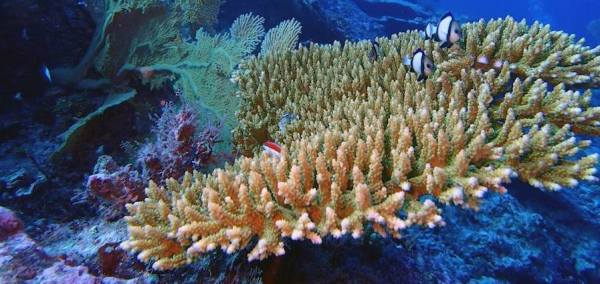
Ocean acidification (OA) threatens coral reef futures by reducing the concentration of carbonate ions that corals need to construct their skeletons. However, quantitative predictions of reef futures under OA are confounded by mixed responses of corals to OA in experiments and field observations. We modeled the skeletal growth of a dominant reef-building coral, Porites, as a... Continue Reading →

Significant changes in the nutrient, carbon, and trace metal balances of the Arctic Ocean are underway

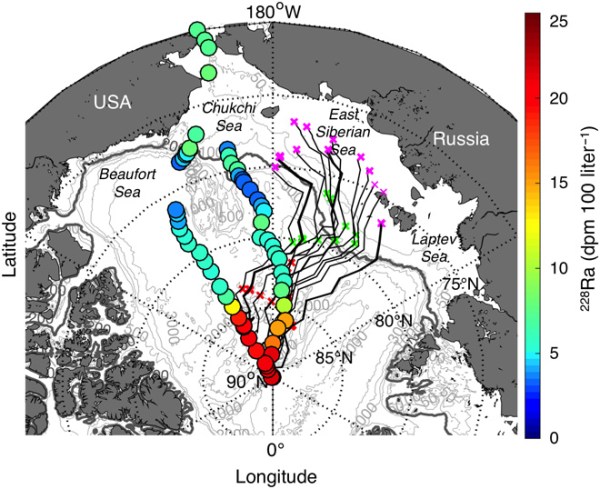
Rising temperatures in the Arctic Ocean region are responsible for changes such as reduced ice cover, permafrost thawing, and increased river discharge, which, together, alter nutrient and carbon cycles over the vast Arctic continental shelf. We show that the concentration of radium-228, sourced to seawater through sediment-water exchange processes, has increased substantially in surface waters... Continue Reading →

Recent wind-driven change in subantarctic mode water and its impact on ocean heat storage

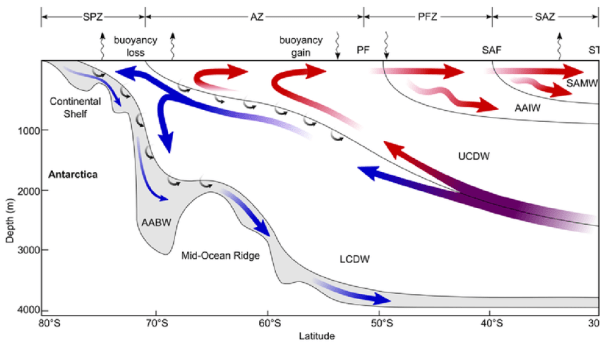
The subduction and export of Subantarctic Mode Water (SAMW) supplies the upper limb of the overturning circulation and makes an important contribution to global heat, freshwater, carbon and nutrient budgets. Upper ocean heat content has increased since 2006, helping to explain the so-called global warming hiatus between 1998 and 2014, with much of the ocean... Continue Reading →

Evidence linking Arctic amplification to extreme weather in mid-latitudes

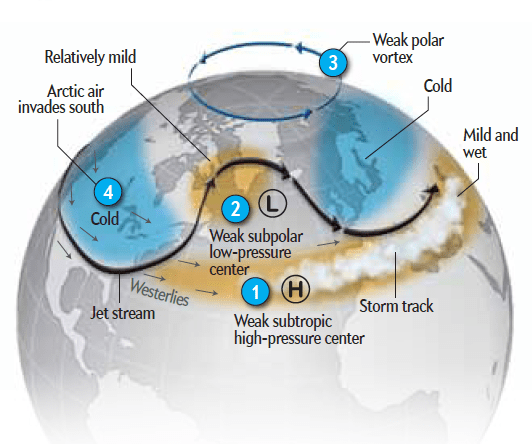
Arctic amplification (AA) – the observed enhanced warming in high northern latitudes relative to the northern hemisphere – is evident in lower-tropospheric temperatures and in 1000-to-500 hPa thicknesses. Daily fields of 500 hPa heights from the National Centers for Environmental Prediction Reanalysis are analyzed over N. America and the N. Atlantic to assess changes in north-south (Rossby)... Continue Reading →

Algae drive enhanced darkening of bare ice on the Greenland ice sheet

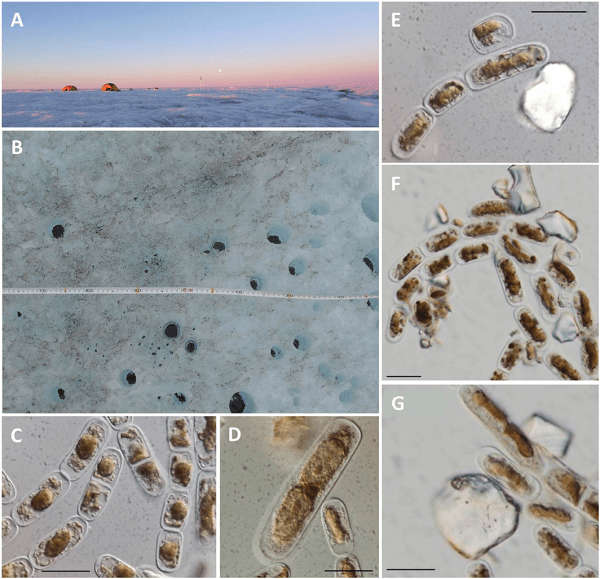
Melting of the Greenland ice sheet is enhanced by surface darkening caused by various impurities. We quantified the contribution of dark pigment-producing algae to the ice sheet surface darkening, based on field measurements in the southwestern part of the ice sheet during the 2014 melt season. Our analysis reveals that the impact of algae on... Continue Reading →

Concerns for ozone recovery

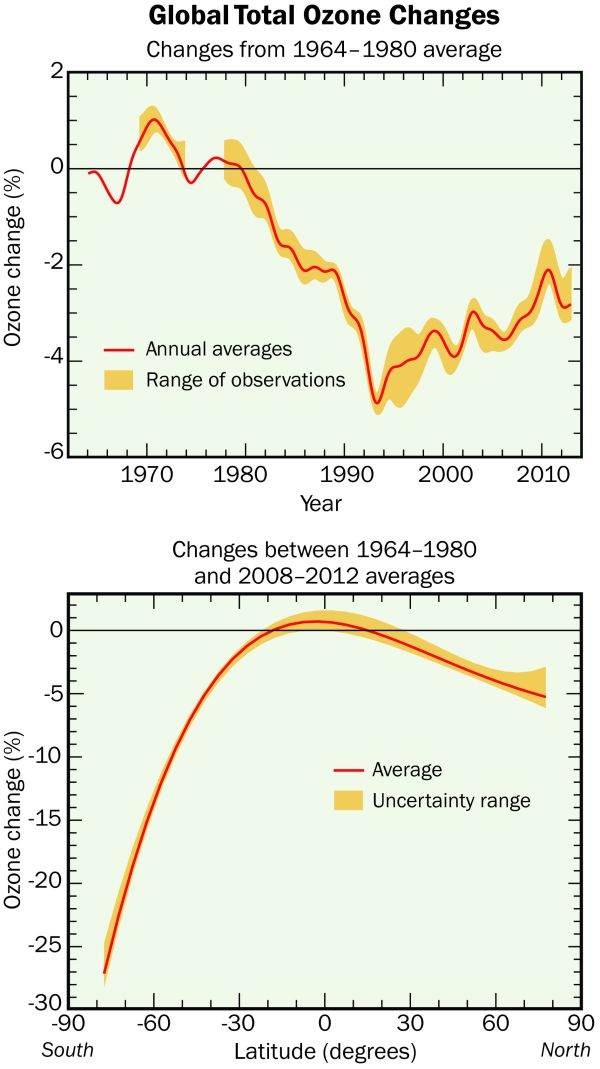
This new paper published in Science suggests that as the tropical oceans get warmer, ocean emissions of methyl bromide (CH3Br) and other short-lived ozone-depleting substances will increase, slowing down the ongoing ozone recovery. Image credit: Scientific assessment of ozone depletion 2014 http://science.sciencemag.org/content/358/6368/1257 https://www.esrl.noaa.gov/research/themes/o3/ http://science.sciencemag.org/content/353/6296/269  

Explaining extreme events from a climate perspective

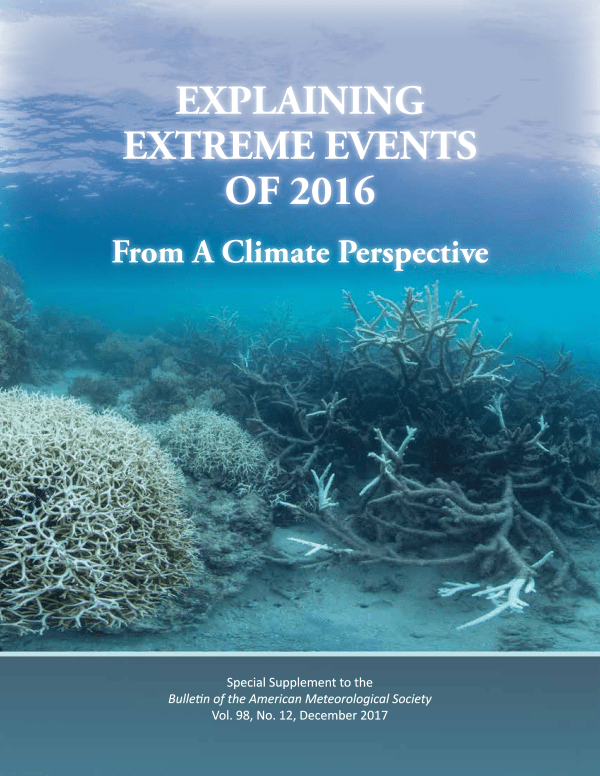
This special report of the Bulletin of the American Meteorological Society (BAMS) presents some extreme events in 2016, such as the record global heat, the heat across Asia, the 2015-16 El Niño and a marine heat wave off the coast of Alaska, and discusses how human-caused climate change may have affected the strength and likelihood of these extreme events.... Continue Reading →

Active Pacific meridional overturning circulation (PMOC) during the warm Pliocene

An essential element of modern ocean circulation and climate is the Atlantic meridional overturning circulation (AMOC), which includes deep-water formation in the subarctic North Atlantic. However, a comparable overturning circulation is absent in the Pacific, the world’s largest ocean, where relatively fresh surface waters inhibit North Pacific deep convection. We present complementary measurement and modeling... Continue Reading →

El Niño-like teleconnection increases California precipitation in response to warming

Future California (CA) precipitation projections, including those from the most recent Climate Model Intercomparison Project (CMIP5), remain uncertain. This uncertainty is related to several factors, including relatively large internal climate variability, model shortcomings, and because CA lies within a transition zone, where mid-latitude regions are expected to become wetter and subtropical regions drier. Here, we... Continue Reading →

Future loss of Arctic sea-ice cover could drive a substantial decrease in California’s rainfall

From 2012 to 2016, California experienced one of the worst droughts since the start of observational records. As in previous dry periods, precipitation-inducing winter storms were steered away from California by a persistent atmospheric ridging system in the North Pacific. Here we identify a new link between Arctic sea-ice loss and the North Pacific geopotential... Continue Reading →

Website Powered by WordPress.com.

Up ↑