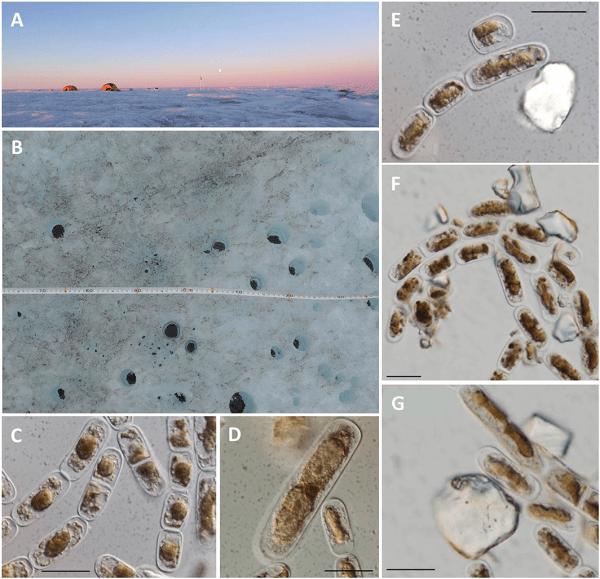
Melting of the Greenland ice sheet is enhanced by surface darkening caused by various impurities. We quantified the contribution of dark pigment-producing algae to the ice sheet surface darkening, based on field measurements in the southwestern part of the ice sheet during the 2014 melt season. Our analysis reveals that the impact of algae on... Continue Reading →
Concerns for ozone recovery
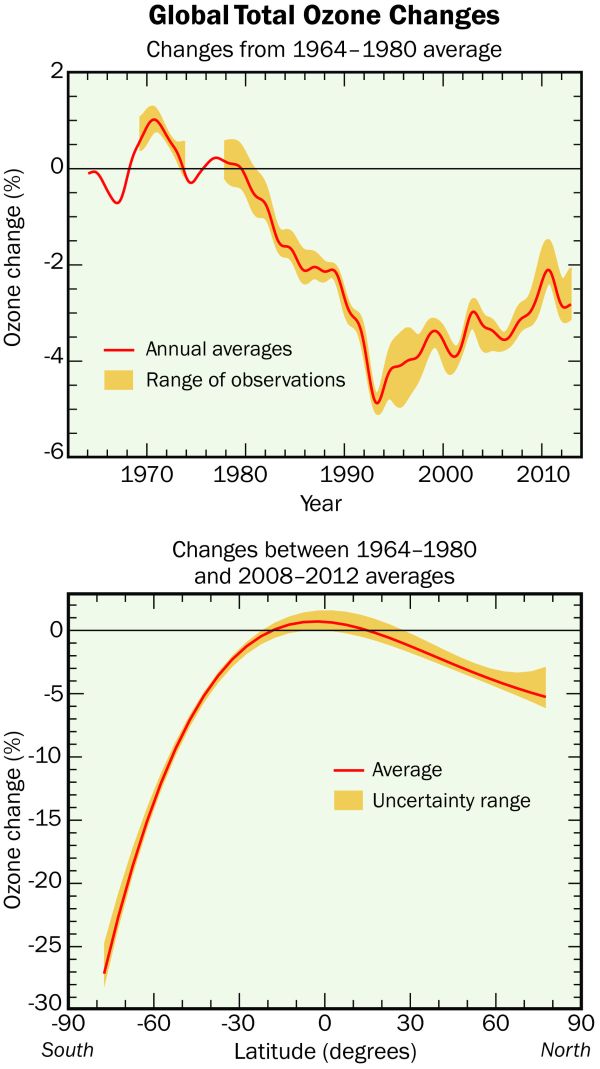
This new paper published in Science suggests that as the tropical oceans get warmer, ocean emissions of methyl bromide (CH3Br) and other short-lived ozone-depleting substances will increase, slowing down the ongoing ozone recovery. Image credit: Scientific assessment of ozone depletion 2014 http://science.sciencemag.org/content/358/6368/1257 https://www.esrl.noaa.gov/research/themes/o3/ http://science.sciencemag.org/content/353/6296/269
Explaining extreme events from a climate perspective
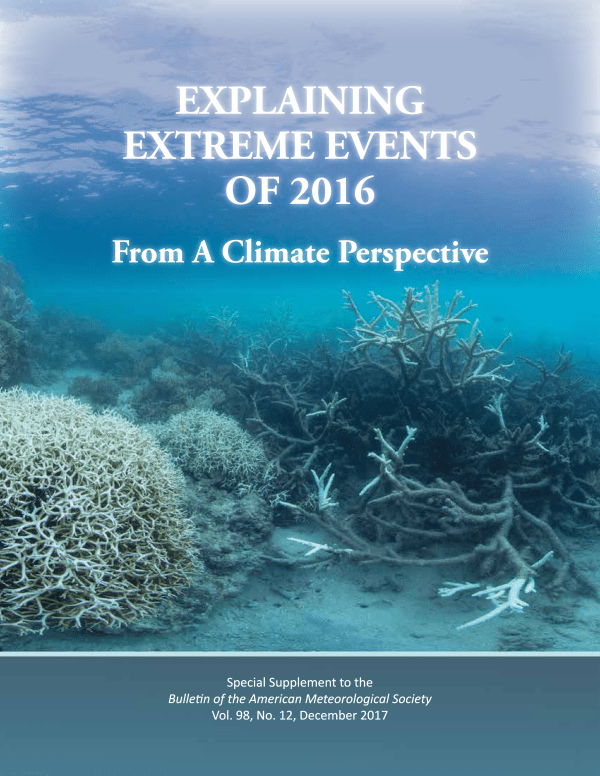
This special report of the Bulletin of the American Meteorological Society (BAMS) presents some extreme events in 2016, such as the record global heat, the heat across Asia, the 2015-16 El Niño and a marine heat wave off the coast of Alaska, and discusses how human-caused climate change may have affected the strength and likelihood of these extreme events.... Continue Reading →
Active Pacific meridional overturning circulation (PMOC) during the warm Pliocene
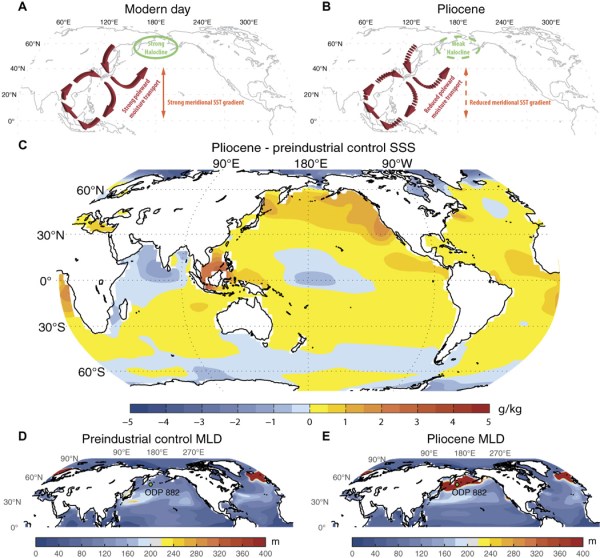
An essential element of modern ocean circulation and climate is the Atlantic meridional overturning circulation (AMOC), which includes deep-water formation in the subarctic North Atlantic. However, a comparable overturning circulation is absent in the Pacific, the world’s largest ocean, where relatively fresh surface waters inhibit North Pacific deep convection. We present complementary measurement and modeling... Continue Reading →
El Niño-like teleconnection increases California precipitation in response to warming
Future California (CA) precipitation projections, including those from the most recent Climate Model Intercomparison Project (CMIP5), remain uncertain. This uncertainty is related to several factors, including relatively large internal climate variability, model shortcomings, and because CA lies within a transition zone, where mid-latitude regions are expected to become wetter and subtropical regions drier. Here, we... Continue Reading →
Future loss of Arctic sea-ice cover could drive a substantial decrease in California’s rainfall
From 2012 to 2016, California experienced one of the worst droughts since the start of observational records. As in previous dry periods, precipitation-inducing winter storms were steered away from California by a persistent atmospheric ridging system in the North Pacific. Here we identify a new link between Arctic sea-ice loss and the North Pacific geopotential... Continue Reading →
Increased rainfall volume from future convective storms in the US
Mesoscale convective system (MCS)-organized convective storms with a size of ~100 km have increased in frequency and intensity in the USA over the past 35 years, causing fatalities and economic losses. However, their poor representation in traditional climate models hampers the understanding of their change in the future. Here, a North American-scale convection-permitting model which is... Continue Reading →
Deep oceans may acidify faster than anticipated due to global warming
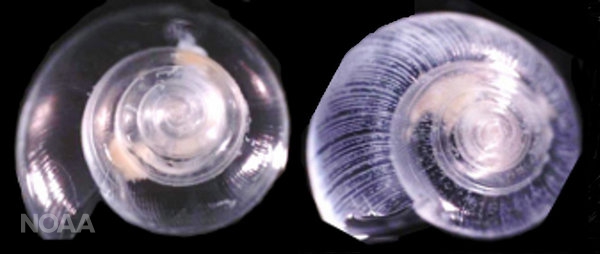
Oceans worldwide are undergoing acidification due to the penetration of anthropogenic CO2 from the atmosphere. The rate of acidification generally diminishes with increasing depth. Yet, slowing down of the thermohaline circulation due to global warming could reduce the pH in the deep oceans, as more organic material would decompose with a longer residence time. To... Continue Reading →
Highlights of the findings of the U.S. global change research program climate science special report
This executive summary presents the Fourth National Climate Assessment (NCA4), an authoritative assessment of the science of climate change, with a focus on the United States. This represents the first of two volumes of the Fourth National Climate Assessment, mandated by the Global Change Research Act of 1990. https://science2017.globalchange.gov/chapter/executive-summary/
Tropical explosive volcanic eruptions can trigger El Niño by cooling tropical Africa
Stratospheric aerosols from large tropical explosive volcanic eruptions backscatter shortwave radiation and reduce the global mean surface temperature. Observations suggest that they also favour an El Niño within 2 years following the eruption. Modelling studies have, however, so far reached no consensus on either the sign or physical mechanism of El Niño response to volcanism.... Continue Reading →