
From 2012 to 2016, California experienced one of the worst droughts since the start of observational records. As in previous dry periods, precipitation-inducing winter storms were steered away from California by a persistent atmospheric ridging system in the North Pacific. Here we identify a new link between Arctic sea-ice loss and the North Pacific geopotential... Continue Reading →
An energetic perspective on United States tropical cyclone landfall droughts
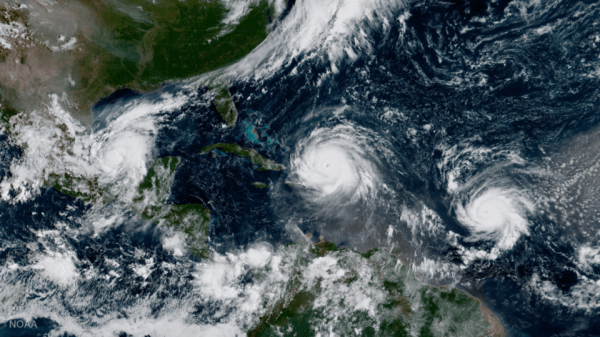
The 2017 Atlantic hurricane season has been extremely active both in terms of the strength of the tropical cyclones that have developed and the amount of storm activity that has occurred near the United States. This is even more notable as it comes at the end of an extended period of below normal U.S. hurricane... Continue Reading →
Increased rainfall volume from future convective storms in the US
Mesoscale convective system (MCS)-organized convective storms with a size of ~100 km have increased in frequency and intensity in the USA over the past 35 years, causing fatalities and economic losses. However, their poor representation in traditional climate models hampers the understanding of their change in the future. Here, a North American-scale convection-permitting model which is... Continue Reading →
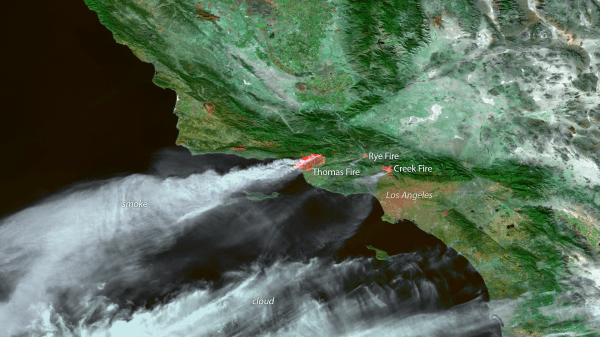
A pan-tropical cascade of fire driven by El Niño – Southern Oscillation
The El Niño/Southern Oscillation (ENSO) has a pronounced influence on year-to-year variations in climate. The response of fires to this forcing is complex and has not been evaluated systematically across different continents. Here we use satellite data to create a climatology of burned-area and fire-emissions responses, drawing on six El Niño and six La Niña... Continue Reading →
Highlights of the findings of the U.S. global change research program climate science special report

This executive summary presents the Fourth National Climate Assessment (NCA4), an authoritative assessment of the science of climate change, with a focus on the United States. This represents the first of two volumes of the Fourth National Climate Assessment, mandated by the Global Change Research Act of 1990. https://science2017.globalchange.gov/chapter/executive-summary/
Prolonged El Niño conditions in 2014–2015 and the rapid intensification of Hurricane Patricia in the eastern Pacific
Hurricane Patricia was the most intense tropical cyclone on record in the eastern North Pacific or Atlantic, reaching a peak intensity of 95 m s−1 only 30 h after attaining hurricane status (33 m s−1). Here it is shown that exceptionally warm sea surface temperatures (SSTs), a deeper than normal thermocline, and strong near-surface salinity stratification all aided Patricia's rapid... Continue Reading →
The North Atlantic Oscillation as a driver of rapid climate change in the Northern Hemisphere
Pronounced climate changes have occurred since the 1970s, including rapid loss of Arctic sea ice, large-scale warming and increased tropical storm activity in the Atlantic. Anthropogenic radiative forcing is likely to have played a major role in these changes, but the relative influence of anthropogenic forcing and natural variability is not well established. The above... Continue Reading →
The role of Atlantic overturning circulation in the recent decline of Atlantic major hurricane frequency
Observed Atlantic major hurricane frequency has exhibited pronounced multidecadal variability since the 1940s. However, the cause of this variability is debated. Using observations and a coupled earth system model (GFDL-ESM2G), here we show that the decline of the Atlantic major hurricane frequency during 2005–2015 is associated with a weakening of the Atlantic Meridional Overturning Circulation... Continue Reading →
US regional tornado outbreaks and their links to spring ENSO phases and North Atlantic SST variability

Recent violent and widespread tornado outbreaks in the US, such as occurred in the spring of 2011, have caused devastating societal impact with significant loss of life and property. At present, our capacity to predict US tornado and other severe weather risk does not extend beyond seven days. In an effort to advance our capability... Continue Reading →
 Ocean to Climate