Increasing ocean stratification intensifies sea surface temperature variability

As the surface ocean warms and polar ice sheets melt due to increasing anthropogenic greenhouse gases in the atmosphere, near-surface ocean stratification is increasing almost everywhere. In tropical and subtropical oceans, in particular, enhanced near-surface stratification inhibits the mixing between warmer surface water and cooler subsurface water, leading to a shallower surface mixed layer. In... Continue Reading →

Human-induced ozone depletion has acted to enhance the La Niña-like SST trend pattern

During the satellite era (1979-present), the tropical Pacific Ocean has warmed significantly less than the other tropical oceans in response to increasing greenhouse gases (GHGs). This La Niña-like warming trend in observations is in disagreement with the El Niño-like warming trend projected by the Coupled Model Intercomparison Project (CMIP) models for both the 20th and... Continue Reading →

ENSO forecasts extended to 18 months?

According to the recharge-discharge oscillator theory (Jin, 1997), the leading mode of tropical Pacific upper ocean heat content anomalies is a predictor (or a precursor) for the onset of El Niño - Southern Oscillation (ENSO) at the interannual time scale. A new study published in Nature (Zhao et al., 2024) utilized multiple global sea surface... Continue Reading →

Quad-State Tornado Outbreaks promoted by a long-lived PNA

On December 10, 2021, one of the most destructive winter tornado outbreaks developed in northeastern Arkansas. This tornado outbreak, later coined as the Quad-State Tornado Outbreaks by the news media, struck portions of the Ohio Valley, including Missouri, Illinois, Tennessee, and Kentucky, from December 10 to 11, 2021. According to the National Oceanic and Atmospheric... Continue Reading →

Why is it hard to identify the subpolar and subtropical jets from zonal-mean zonal wind profiles?

Two important atmospheric jet streams that shape the extratropical zonal wind field in both hemispheres are the subtropical jet and the subpolar jet. The subtropical jet is located around 30° latitude line at the boundary between the Hadley cell and the Ferrel cell, and is predominantly a high-altitude feature. Since it is largely in thermal-wind... Continue Reading →

MJO-driven onset of the 2021 Atlantic Niño

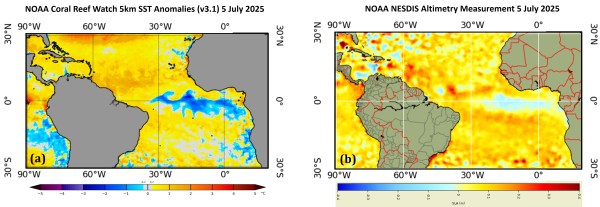
Atlantic Niño is the Atlantic counterpart of El Niño in the Pacific, often referred to as El Niño's little brother. It was previously thought to have only regional influence on rainfall variability in West Africa, but a growing number of studies have shown that Atlantic Niño also plays an important role in the development of... Continue Reading →

El Niño’s little brother in the Atlantic may not be so little when it comes to its impact on hurricanes

Atlantic Niño, characterized by warm sea surface temperature (SST) anomalies in the eastern equatorial Atlantic, is the Atlantic counterpart of the Pacific El Niño. Due to its smaller size in zonal extent, it is often referred to as El Niño’s little brother. It was previously thought to have a limited regional influence on rainfall variability... Continue Reading →

Java-Sumatra Niño/Niña: two long-lost siblings of El Niño

There are many siblings, cousins, and distant relatives of El Niño spanning the Pacific, Atlantic, and Indian Oceans who share a feature in common: ocean surface temperature anomalies along eastern boundaries linked to changes in the upwelling of cooler water from below. So far, climate scientists have identified a total of 14 members of this... Continue Reading →

Nearshore sea ice shield Antarctic ice shelves from the damaging impact of ocean waves

The Larsen ice shelves extend along the east coast of the Antarctic Peninsula over the northwest part of the Weddell Sea. From north to south, these segments are called the Larsen A, B, C, and D, bordered by Filchner–Ronne Ice Shelf south of the Weddell Sea. In 1995, the Larsen A ice shelf completely disintegrated,... Continue Reading →

North Atlantic zonal winds will shift northward and become more extreme in the future

The warming response of the upper atmosphere is much stronger in the tropics due to higher water vapor content and frequent deep tropical convection that maintains the atmosphere column well-mixed. As a result, the zonal jet strength, which is largely proportional to the meridional gradient of atmosphere temperature via "thermal wind relationship" is projected to... Continue Reading →

Website Powered by WordPress.com.

Up ↑