Michael White is a climate science editor for Nature. He posted on Twitter a list of useful tips for climate scientists to consider before they submit their work to Nature or other journals. Personally, I would like to stress his suggestion to avoid subjective wording like “unprecedented”, “dramatic”, and “remarkable”. Such a subjective word gives... Continue Reading →
3 most memorable reviews … so far
Throughout my career, I have published many scientific papers and reviewed even more papers. So, I have received or encountered many interesting reviews. Here are the 3 most memorable comments that I have received so far. #3) "The paper is very poorly written, lacks objective detail, and makes fatal flaw assumptions about the role of... Continue Reading →
MJO-driven onset of the 2021 Atlantic Niño
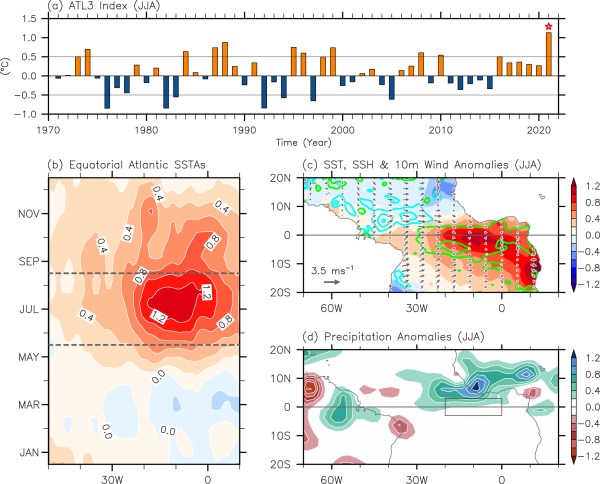
Atlantic Niño is the Atlantic counterpart of El Niño in the Pacific, often referred to as El Niño's little brother. It was previously thought to have only regional influence on rainfall variability in West Africa, but a growing number of studies have shown that Atlantic Niño also plays an important role in the development of... Continue Reading →
On the fate of the 2023-24 El Niño
As of July 2023, the developing El Niño in the Pacific has already exceeded its sea surface temperature (SST) anomalies of 1°C in Niño3.4 region (central Pacific) and 3°C in Niño1+2 region (far eastern Pacific). This is the first time to have those SST thresholds exceeded since the development of 1997-98 "supper El Niño" in... Continue Reading →
How did excessive Labrador Sea convection in the 1990s increase the AMOC?
The Overturning in the Subpolar North Atlantic Program (OSNAP) observing system, which was launched in the summer of 2014 comprises an integrated coast-to-coast array of two sections: OSNAP West, extending from the southeastern Labrador shelf to the southwestern tip of Greenland, and OSNAP East, extending from the southeastern tip of Greenland to the Scottish shelf.... Continue Reading →
Is the AMOC shutting down soon?
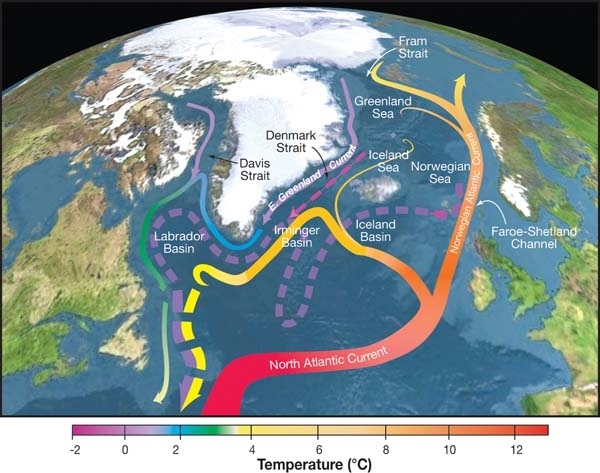
The Atlantic Meridional Overturning Circulation (AMOC) is the Atlantic component of the global ocean conveyor belt, which is a large-scale ocean circulation system that connects the Arctic, Atlantic, Indian, and Pacific Oceans via the Southern Ocean. Predominantly driven by deep convection in the high-latitude North Atlantic Ocean, the AMOC carries heat, salt, carbon, and other... Continue Reading →
Your suggestion “rejected” in a shared online document?
Online document-sharing service has revolutionized the way scientists share documents and interact with collaborators. Google Docs is probably the most widely used online document-sharing service. I use it almost every day for work and to share scientific paper drafts with coauthors. It is very convenient and facilitates collaboration between co-authors. For instance, a co-author can... Continue Reading →
El Niño’s little brother in the Atlantic may not be so little when it comes to its impact on hurricanes
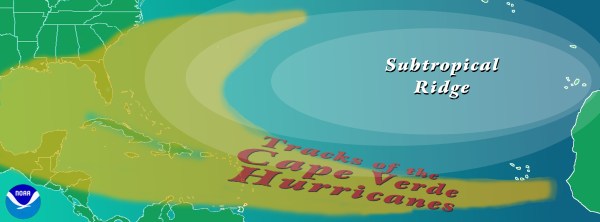
Atlantic Niño, characterized by warm sea surface temperature (SST) anomalies in the eastern equatorial Atlantic, is the Atlantic counterpart of the Pacific El Niño. Due to its smaller size in zonal extent, it is often referred to as El Niño’s little brother. It was previously thought to have a limited regional influence on rainfall variability... Continue Reading →
Atlantic deep water is now warm enough to melt previously stable Greenland glacier
Ice sheet melting from Greenland's glaciers accounts for an increasing proportion of global sea level rise, losing ~330 billion tonnes of ice per year during 2006-2018 (compared to ~120 billion tonnes of ice per year during 1901-1990). A new study published in Nature Communications examined recent changes at K.I.V Steenstrups Nordre Bræ (66.53°N, 34.57°W), a... Continue Reading →
The Global Ocean Conveyor Belt is Reshaping from the Southern Ocean
As the surface ocean warms and polar ice sheets melt due to increasing anthropogenic greenhouse gases in the atmosphere, near-surface stratification is increasing almost everywhere, including the major deep water formation regions in the high-latitude North Atlantic and around Antarctica. As a result, the global Meridional Overturning Circulation (MOC), also known as the global ocean... Continue Reading →