Grounding lines are a key indicator of ice-sheet instability, because changes in their position reflect imbalance with the surrounding ocean and affect the flow of inland ice. Although the grounding lines of several Antarctic glaciers have retreated rapidly due to ocean-driven melting, records are too scarce to assess the scale of the imbalance. Here, we... Continue Reading →
Is AMOC slowing down?
A recent article appeared in Nature suggested that the AMOC has been very weak during the past 150 years since the end of the Little Ice Age (LIA) , and that enhanced freshwater fluxes from the Arctic and Nordic seas towards the end of the LIA weakened Labrador Sea convection and thus the AMOC. They... Continue Reading →
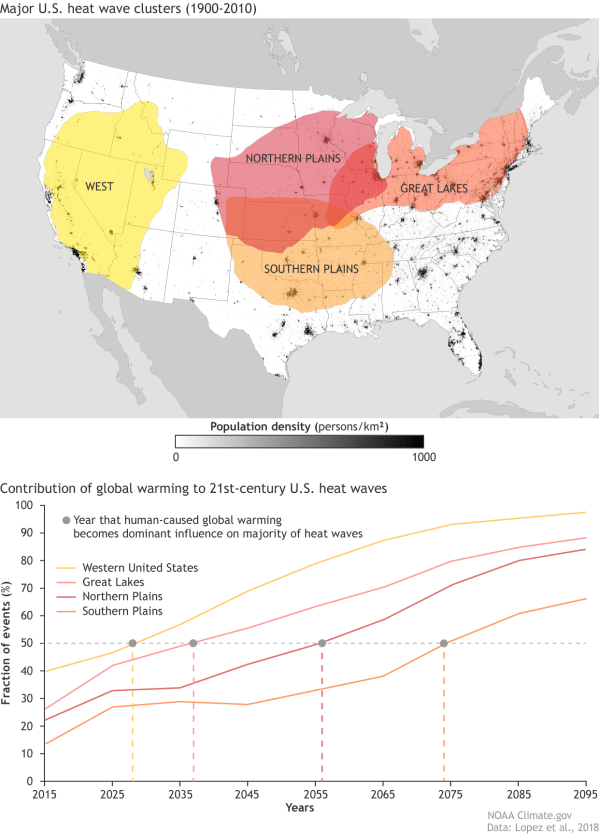
Influence of global warming on U.S. heat waves may be felt first in the West and Great Lakes regions
Climate projections for the twenty-first century suggest an increase in the occurrence of heat waves. However, the time at which externally forced signals of anthropogenic climate change (ACC) emerge against background natural variability (time of emergence (ToE)) has been challenging to quantify, which makes future heat-wave projections uncertain. Here we combine observations and model simulations... Continue Reading →
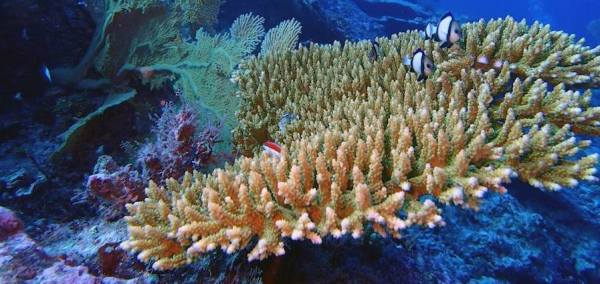
Ocean acidification affects coral growth by reducing skeletal density
Ocean acidification (OA) threatens coral reef futures by reducing the concentration of carbonate ions that corals need to construct their skeletons. However, quantitative predictions of reef futures under OA are confounded by mixed responses of corals to OA in experiments and field observations. We modeled the skeletal growth of a dominant reef-building coral, Porites, as a... Continue Reading →
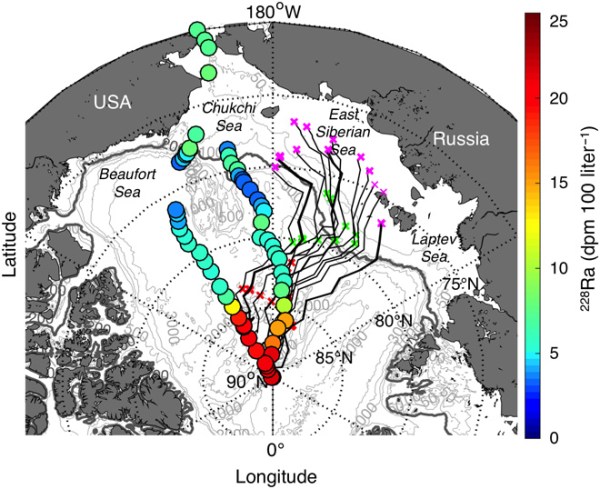
Significant changes in the nutrient, carbon, and trace metal balances of the Arctic Ocean are underway
Rising temperatures in the Arctic Ocean region are responsible for changes such as reduced ice cover, permafrost thawing, and increased river discharge, which, together, alter nutrient and carbon cycles over the vast Arctic continental shelf. We show that the concentration of radium-228, sourced to seawater through sediment-water exchange processes, has increased substantially in surface waters... Continue Reading →
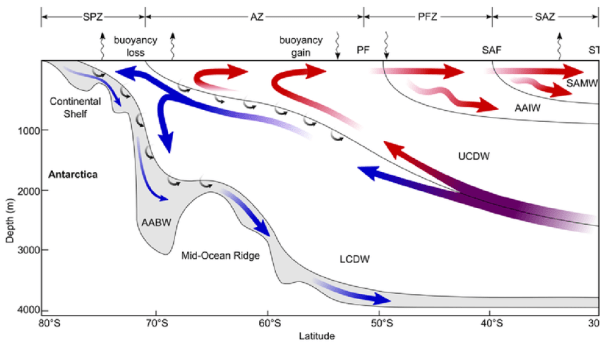
Recent wind-driven change in subantarctic mode water and its impact on ocean heat storage
The subduction and export of Subantarctic Mode Water (SAMW) supplies the upper limb of the overturning circulation and makes an important contribution to global heat, freshwater, carbon and nutrient budgets. Upper ocean heat content has increased since 2006, helping to explain the so-called global warming hiatus between 1998 and 2014, with much of the ocean... Continue Reading →
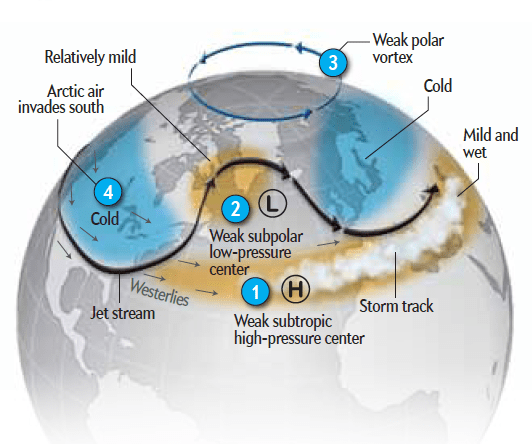
Evidence linking Arctic amplification to extreme weather in mid-latitudes
Arctic amplification (AA) – the observed enhanced warming in high northern latitudes relative to the northern hemisphere – is evident in lower-tropospheric temperatures and in 1000-to-500 hPa thicknesses. Daily fields of 500 hPa heights from the National Centers for Environmental Prediction Reanalysis are analyzed over N. America and the N. Atlantic to assess changes in north-south (Rossby)... Continue Reading →
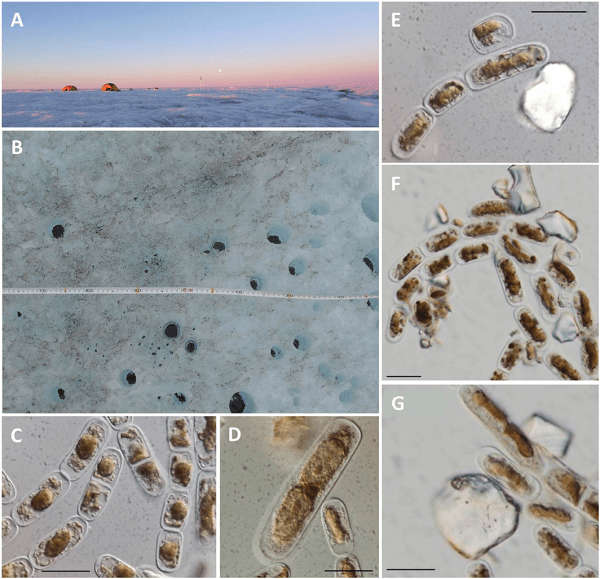
Algae drive enhanced darkening of bare ice on the Greenland ice sheet
Melting of the Greenland ice sheet is enhanced by surface darkening caused by various impurities. We quantified the contribution of dark pigment-producing algae to the ice sheet surface darkening, based on field measurements in the southwestern part of the ice sheet during the 2014 melt season. Our analysis reveals that the impact of algae on... Continue Reading →
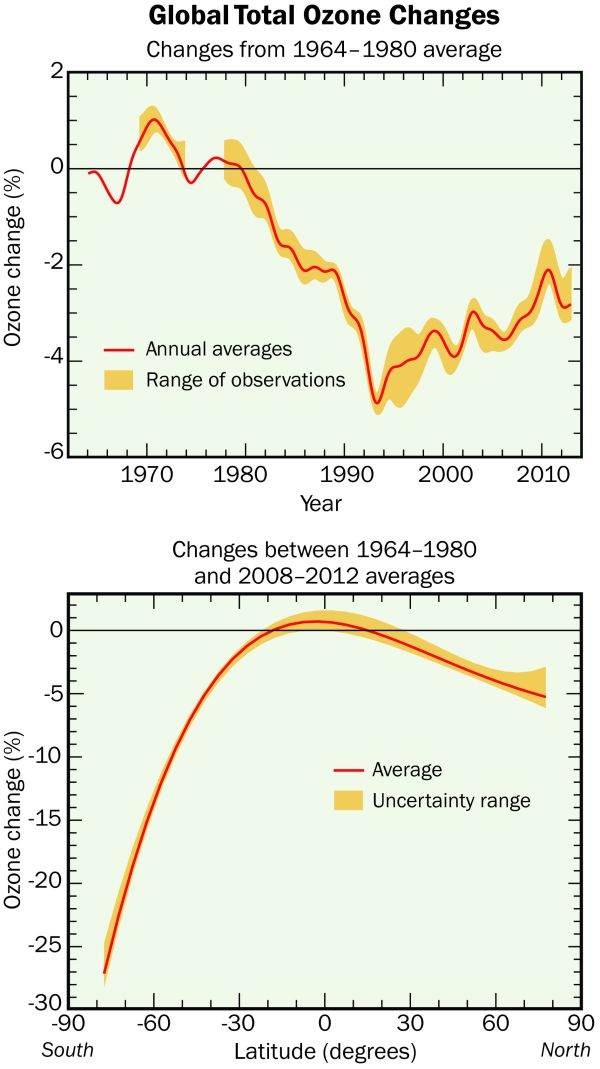
Concerns for ozone recovery
This new paper published in Science suggests that as the tropical oceans get warmer, ocean emissions of methyl bromide (CH3Br) and other short-lived ozone-depleting substances will increase, slowing down the ongoing ozone recovery. Image credit: Scientific assessment of ozone depletion 2014 http://science.sciencemag.org/content/358/6368/1257 https://www.esrl.noaa.gov/research/themes/o3/ http://science.sciencemag.org/content/353/6296/269
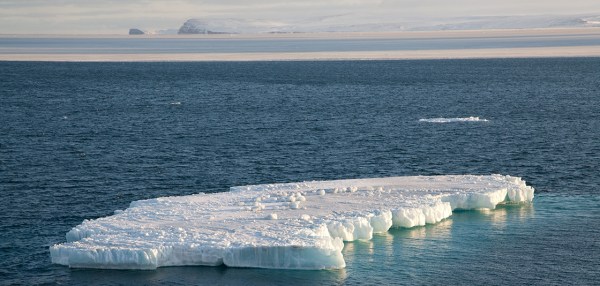
Arctic report card: update for 2017
NOAA's Arctic program released Arctic Report Card Update for 2017. The report finds "Arctic shows no sign of returning to reliably frozen region of recent past decades", "The sea ice cover continues to be relatively young and thin with older, thicker ice comprising only 21% of the ice cover in 2017 compared to 45% in 1985.", and... Continue Reading →