A pan-tropical cascade of fire driven by El Niño – Southern Oscillation

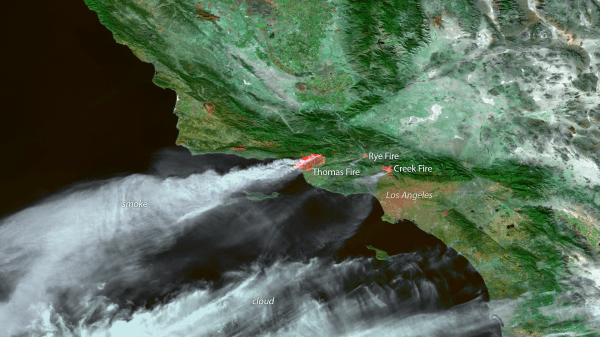
The El Niño/Southern Oscillation (ENSO) has a pronounced influence on year-to-year variations in climate. The response of fires to this forcing is complex and has not been evaluated systematically across different continents. Here we use satellite data to create a climatology of burned-area and fire-emissions responses, drawing on six El Niño and six La Niña... Continue Reading →

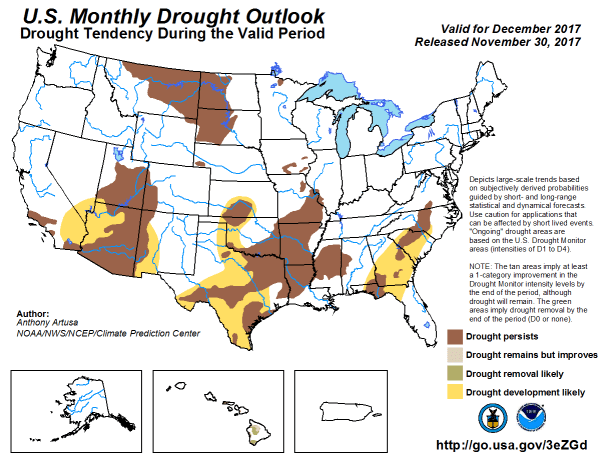
Drought conditions will maintain across a significant portion of the contiguous United States during December 2017

According to the US monthly drought outlook issued by NOAA CPC in November 30, the current severe drought conditions will maintain over the southern US. This is likely due to the developing La Nina condition in the Pacific. During La Niña, the winter atmospheric jet stream in the Pacific often takes an unusually wavy path... Continue Reading →

Highlights of the findings of the U.S. global change research program climate science special report

This executive summary presents the Fourth National Climate Assessment (NCA4), an authoritative assessment of the science of climate change, with a focus on the United States. This represents the first of two volumes of the Fourth National Climate Assessment, mandated by the Global Change Research Act of 1990. https://science2017.globalchange.gov/chapter/executive-summary/

Tropical explosive volcanic eruptions can trigger El Niño by cooling tropical Africa

Stratospheric aerosols from large tropical explosive volcanic eruptions backscatter shortwave radiation and reduce the global mean surface temperature. Observations suggest that they also favour an El Niño within 2 years following the eruption. Modelling studies have, however, so far reached no consensus on either the sign or physical mechanism of El Niño response to volcanism.... Continue Reading →

Decade-long deep-ocean warming detected in the subtropical South Pacific

The persistent energy imbalance at the top of the atmosphere, inferred from satellite measurements, indicates that the Earth's climate system continues to accumulate excess heat. As only sparse and irregular measurements of ocean heat below 2000 m depth exist, one of the most challenging questions in global climate change studies is whether the excess heat has... Continue Reading →

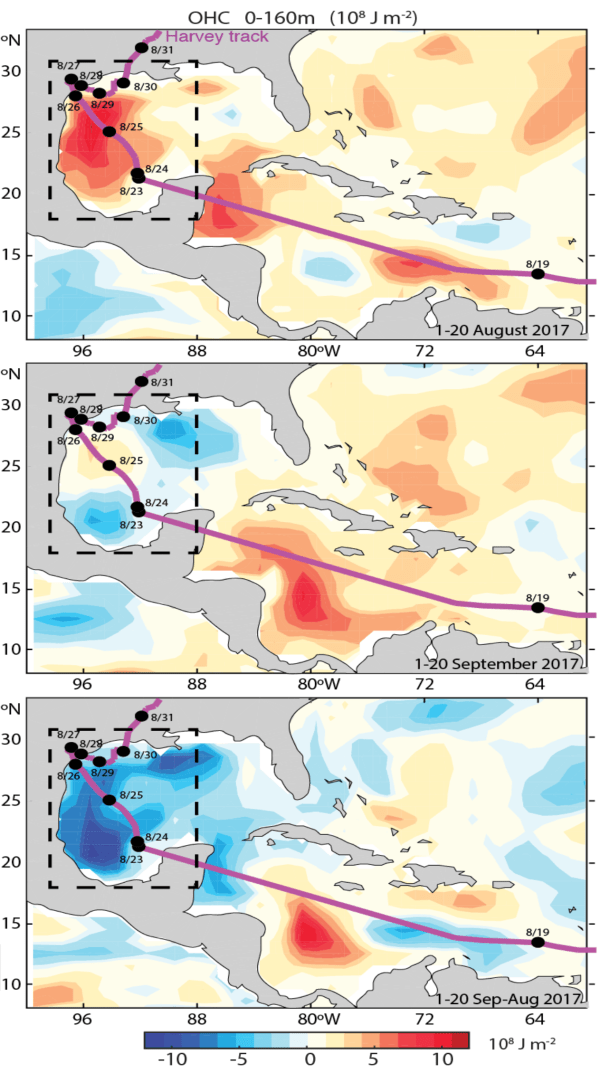
Prolonged El Niño conditions in 2014–2015 and the rapid intensification of Hurricane Patricia in the eastern Pacific

Hurricane Patricia was the most intense tropical cyclone on record in the eastern North Pacific or Atlantic, reaching a peak intensity of 95 m s−1 only 30 h after attaining hurricane status (33 m s−1). Here it is shown that exceptionally warm sea surface temperatures (SSTs), a deeper than normal thermocline, and strong near-surface salinity stratification all aided Patricia's rapid... Continue Reading →

US regional tornado outbreaks and their links to spring ENSO phases and North Atlantic SST variability

Recent violent and widespread tornado outbreaks in the US, such as occurred in the spring of 2011, have caused devastating societal impact with significant loss of life and property. At present, our capacity to predict US tornado and other severe weather risk does not extend beyond seven days. In an effort to advance our capability... Continue Reading →

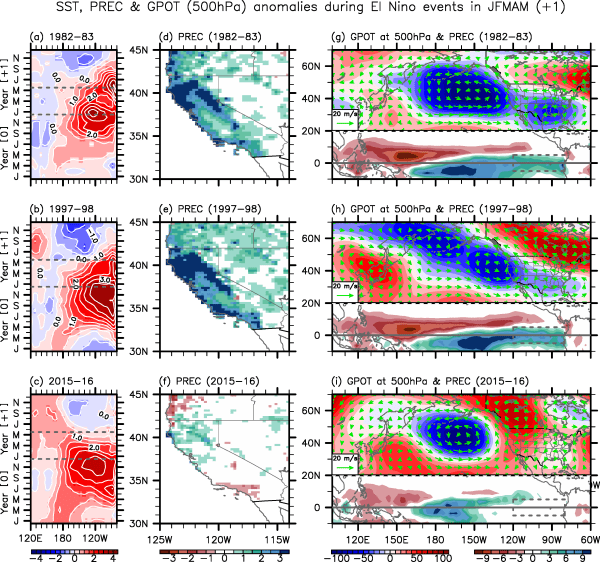
The defining characteristics of ENSO extremes and the strong 2015/16 El Niño

The El Niño Southern Oscillation (ENSO) continues to boast its prominence as Earth's strongest source of year-to-year climate variability with the appearance of a remarkable El Niño event in the boreal winter of 2015. The 2015/16 El Niño was indeed a strong event with dramatic impact on a global scale. However, it exhibited distinct characteristics... Continue Reading →

Website Powered by WordPress.com.

Up ↑