
From 2012 to 2016, California experienced one of the worst droughts since the start of observational records. As in previous dry periods, precipitation-inducing winter storms were steered away from California by a persistent atmospheric ridging system in the North Pacific. Here we identify a new link between Arctic sea-ice loss and the North Pacific geopotential... Continue Reading →
Deep oceans may acidify faster than anticipated due to global warming
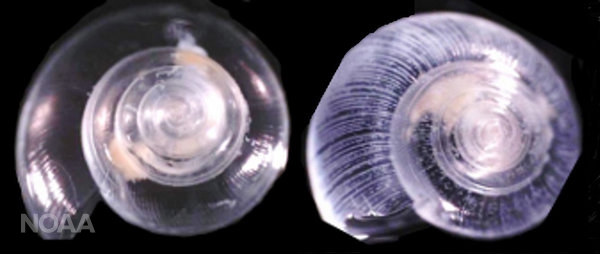
Oceans worldwide are undergoing acidification due to the penetration of anthropogenic CO2 from the atmosphere. The rate of acidification generally diminishes with increasing depth. Yet, slowing down of the thermohaline circulation due to global warming could reduce the pH in the deep oceans, as more organic material would decompose with a longer residence time. To... Continue Reading →
Highlights of the findings of the U.S. global change research program climate science special report

This executive summary presents the Fourth National Climate Assessment (NCA4), an authoritative assessment of the science of climate change, with a focus on the United States. This represents the first of two volumes of the Fourth National Climate Assessment, mandated by the Global Change Research Act of 1990. https://science2017.globalchange.gov/chapter/executive-summary/
The reinvigoration of the Southern Ocean carbon sink
Several studies have suggested that the carbon sink in the Southern Ocean—the ocean’s strongest region for the uptake of anthropogenic CO2 —has weakened in recent decades. We demonstrated, on the basis of multidecadal analyses of surface ocean CO2 observations, that this weakening trend stopped around 2002, and by 2012, the Southern Ocean had regained its... Continue Reading →
Ocean heat drives rapid basal melt of the Totten Ice Shelf
Mass loss from the West Antarctic ice shelves and glaciers has been linked to basal melt by ocean heat flux. The Totten Ice Shelf in East Antarctica, which buttresses a marine-based ice sheet with a volume equivalent to at least 3.5 m of global sea-level rise, also experiences rapid basal melt, but the role of... Continue Reading →
Arctic sea-ice decline weakens the Atlantic Meridional Overturning Circulation
The ongoing decline of Arctic sea ice exposes the ocean to anomalous surface heat and freshwater fluxes, resulting in positive buoyancy anomalies that can affect ocean circulation. In this study, we use an optimal flux perturbation framework and comprehensive climate model simulations to estimate the sensitivity of the Atlantic Meridional Overturning Circulation (AMOC) to such... Continue Reading →
The influence of environmental variability on the biogeography of coccolithophores and diatoms in the Great Calcite Belt
The Great Calcite Belt (GCB), a region of high calcite concentration from coccolithophores, covers 60 % of the Southern Ocean area. We examined the influence of temperature, macronutrients, and carbonate chemistry on the distribution of mineralizing phytoplankton in the GCB. Coccolithophores occupy a niche in the Southern Ocean after the diatom spring bloom depletes silicic acid.... Continue Reading →
Wind-driven ocean dynamics impact on the contrasting sea-ice trends around West Antarctic
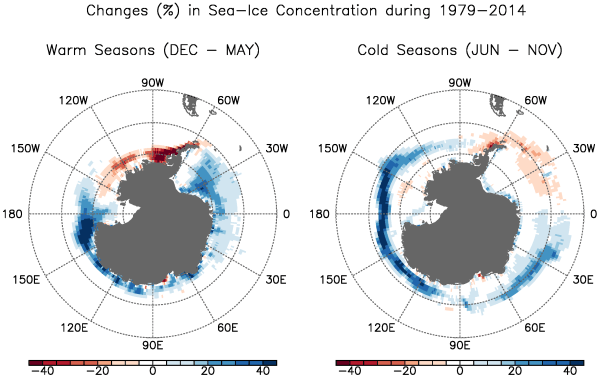
Since late 1978, Antarctic sea-ice extent has overall expanded in all seasons in stark contrast to the retreating Arctic sea-ice extent. However, while the sea-ice extent around East Antarctica has increased monotonically, the sea-ice around West Antarctica exhibits regionally and seasonally inhomogeneous trends. For instance, Antarctic sea-ice extent in the East Pacific has decreased substantially... Continue Reading →
 Ocean to Climate