The Atlantic’s Long Reach: How tropical Ocean Warming Fuels Greenland’s Melt
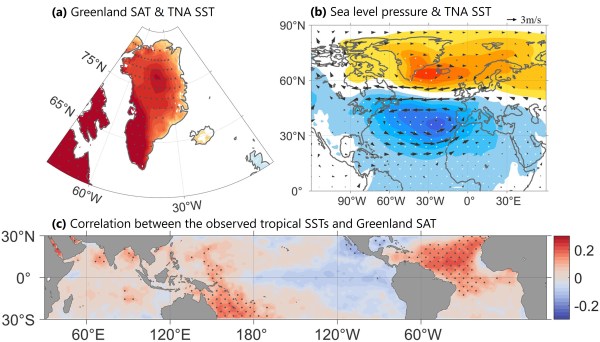
This blog post and the “Deep Dive” podcast, created by NotebookLM, are based on “Surface warming over Greenland amplified by remote forcing from tropical Atlantic” by Zhang et al. (2025). Recent research indicates that sea surface temperature variability in the tropical North Atlantic acts as a remote driver for the significant warming of the Greenland... Continue Reading →

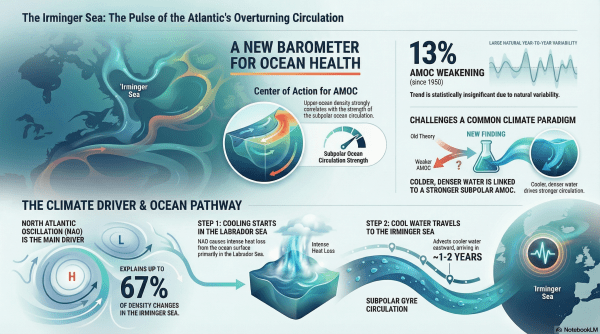
Rethinking the AMOC Variability: Why the Irminger Sea—Not the Labrador Sea—Is the True Center of Action

This blog post and the “Deep Dive” podcast, created by NotebookLM, are based on “Irminger Sea Is the Center of Action for Subpolar AMOC Variability” by Chafik et al. (2022). Summary: Chafik et al. (2022) identified the Irminger Sea as the primary "center of action" for driving fluctuations in the subpolar Atlantic Meridional Overturning Circulation... Continue Reading →

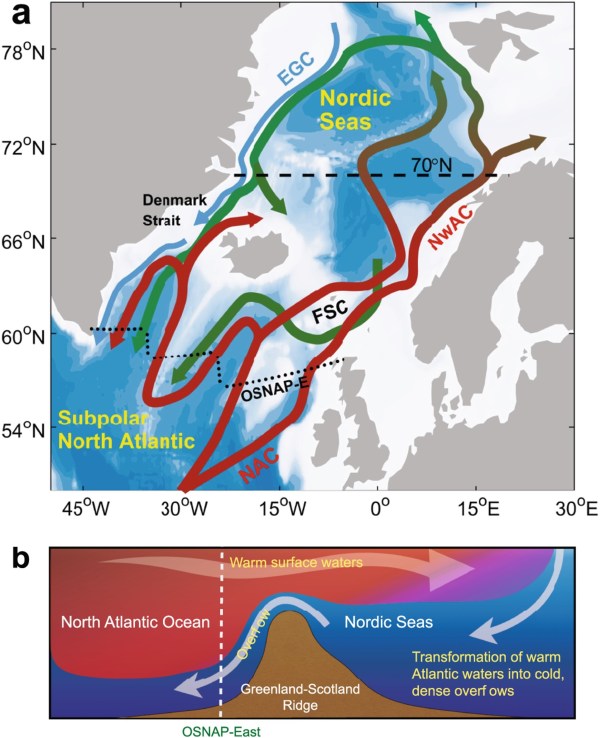
The Nordic Seas Overturning Circulation Is Set to Rebound After the 2040s

This blog post and the “Deep Dive” podcast, created by NotebookLM, are based on “Future strengthening of the Nordic Seas overturning circulation” by Årthun et al. (2023). When we talk about climate change and the ocean, one of the most prominent stories is the weakening of the Atlantic Meridional Overturning Circulation (AMOC). This vast system... Continue Reading →

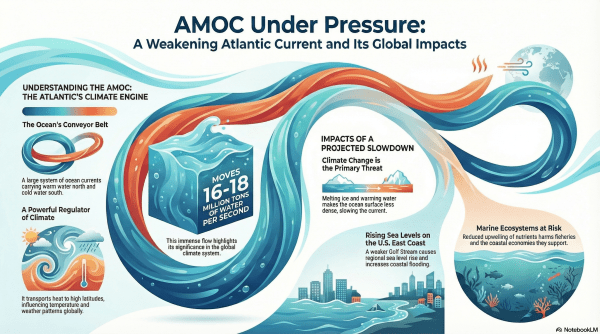
The Atlantic’s Weakening Pulse: How a Slowing Ocean Current Could Reshape Our Climate and Coasts

This blog post and the “Deep Dive” podcast, created by NotebookLM, are based on "State of the Science Fact Sheet: Atlantic Meridional Overturning Circulation (AMOC)" by NOAA Science Council. This NOAA fact sheet briefly explains the Atlantic Meridional Overturning Circulation (AMOC), defining it as a critical ocean current that transports heat, salt, and carbon by... Continue Reading →

A Climate ‘Tug-of-War’ Has Paused the Atlantic Current’s Slowdown

This blog post and the “Deep Dive” podcast on a paper “A pause in the weakening of the Atlantic meridional overturning circulation since the early 2010s” by Lee et al. (2024) was created by NotebookLM. Deep Dive Podcast “Atlantic Current Stability Is Borrowed Time” powered by NotebookLM: Introduction: The Ocean's Alarming Story Just Got More... Continue Reading →

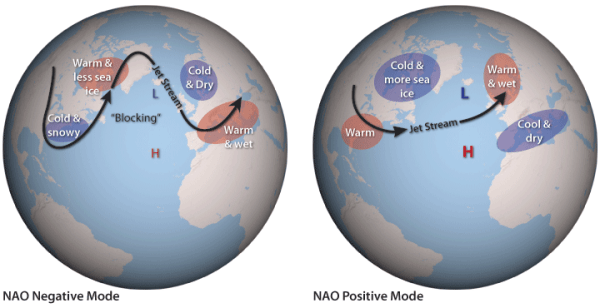
AI’s summary of the signal-to-noise paradox related to the NAO

I asked Gemini (Flash 2.5) about the signal-to-noise paradox regarding the North Atlantic Oscillation, which is one of the emerging new ideas (or concepts) in climate research. Here is the reply. Yes, I am familiar with the signal-to-noise paradox, especially as it relates to the North Atlantic Oscillation (NAO). It's a significant and intriguing challenge... Continue Reading →

Future strengthening of the Antarctic Slope Current and its potential implications for global sea level rise

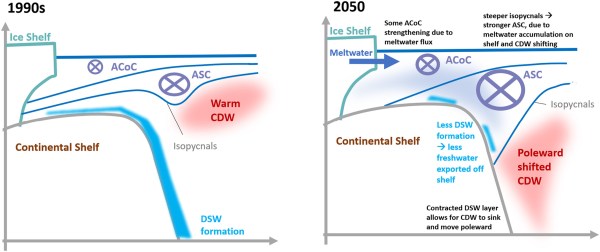
The Antarctic Slope Current (ASC) is the westward-flowing coastal current system around Antarctica, largely driven by easterly winds. It serves as a barrier to heat and salt exchanges between the cold, fresh Antarctic ice shelf region and the warm, salty Circumpolar Deep Water (CDW) in the Southern Ocean. A weakening of the ASC allows more... Continue Reading →

A note on the potential AMOC collapse for nonexperts

As the Earth warms due to anthropogenic climate change, sea- and land-based ice melts, adding buoyant freshwater to the surface of the high-latitude North Atlantic and thus decreasing salinity. This makes the surface water lighter reducing the sinking of the surface water and thus the AMOC. However, the amount of added freshwater is not enough... Continue Reading →

The annual mean AMOC in 2022 is the lowest after its biggest drop in 2009

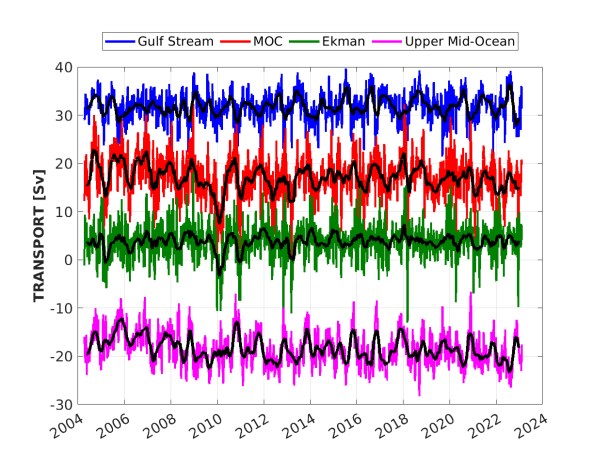
Scientists have been monitoring the Atlantic Meridional Overturning Circulation (AMOC) at around 26.5°N since April 2004 through the RAPID/Meridional Overturning Circulation and Heatflux Array/Western Boundary Time Series moored array (RAPID). The newly released RAPID dataset fully incorporated a recent geomagnetic correction of the submarine cable measurement of the Florida Current transport, a critical component of... Continue Reading →

France’s floating ocean laboratory is a future hub of international Arctic research collaboration

As of 2024, there are currently 70 permanent research stations from 29 countries scattered around the continent of Antarctica conducting important scientific research to better understand the Earth system and its changes due to human activity. In the Arctic, however, there are no such permanent research stations because there is no land in the Arctic.... Continue Reading →

Website Powered by WordPress.com.

Up ↑