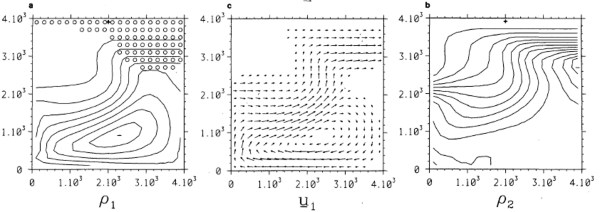
I was discussing with my colleagues about a recent northward shift of the Gulf Stream position and debating why that happened. So, I decided to read again one of my favorite physical oceanography papers "A two-level wind and buoyancy driven thermocline model" by the late Dr. Peter D. Killworth. This paper was published in 1985... Continue Reading →
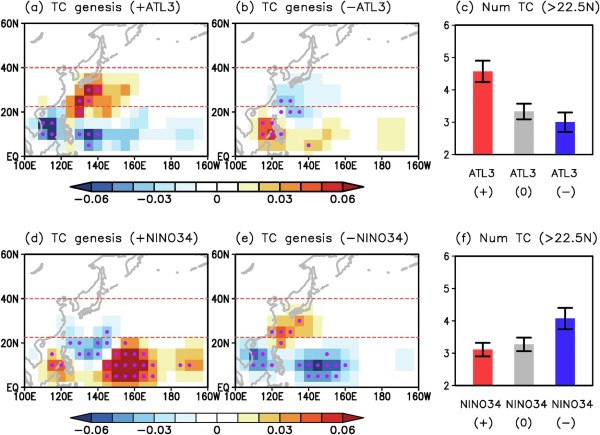
Onset of 2025 Atlantic Niña and its implication for typhoon landfalling risks in East and Southeast Asian countries
Atlantic Niña is a natural climate pattern characterized by cooler-than-average sea surface temperatures in the eastern equatorial Atlantic Ocean, appearing predominantly in June-August. It is considered the 'cold phase' of the Atlantic Zonal Mode, the leading mode of tropical Atlantic sea surface temperature variability in June-August, similar to how La Niña is the cold phase... Continue Reading →
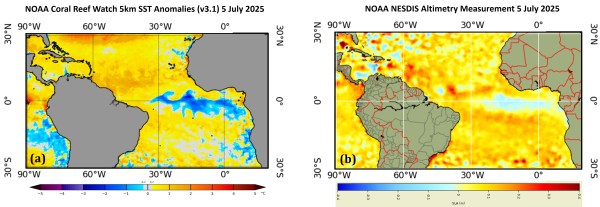
Onset of 2025 Atlantic Niña: What it means for the Atlantic hurricane season (updated)
Atlantic Niña is a natural climate pattern characterized by cooler-than-average sea surface temperatures in the eastern equatorial Atlantic Ocean. It’s considered the 'cold phase' of what oceanographers call the Atlantic Zonal Mode, similar to how La Niña is the cold phase of the El Niño-Southern Oscillation (ENSO) in the Pacific. Looking at the latest NOAA... Continue Reading →
AI’s summary of the signal-to-noise paradox related to the NAO
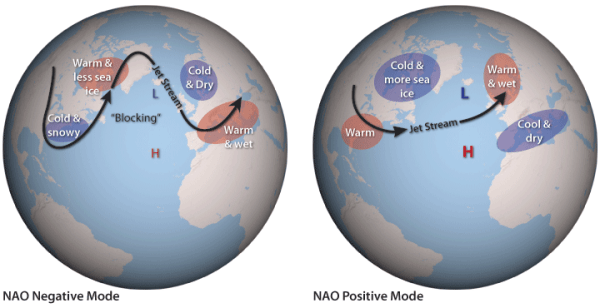
I asked Gemini (Flash 2.5) about the signal-to-noise paradox regarding the North Atlantic Oscillation, which is one of the emerging new ideas (or concepts) in climate research. Here is the reply. Yes, I am familiar with the signal-to-noise paradox, especially as it relates to the North Atlantic Oscillation (NAO). It's a significant and intriguing challenge... Continue Reading →
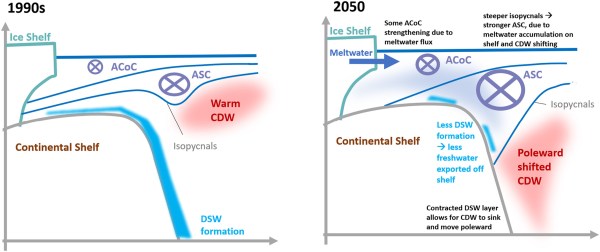
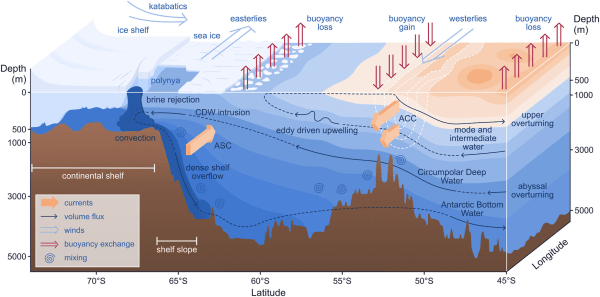
Future strengthening of the Antarctic Slope Current and its potential implications for global sea level rise
The Antarctic Slope Current (ASC) is the westward-flowing coastal current system around Antarctica, largely driven by easterly winds. It serves as a barrier to heat and salt exchanges between the cold, fresh Antarctic ice shelf region and the warm, salty Circumpolar Deep Water (CDW) in the Southern Ocean. A weakening of the ASC allows more... Continue Reading →
A note on the potential AMOC collapse for nonexperts
As the Earth warms due to anthropogenic climate change, sea- and land-based ice melts, adding buoyant freshwater to the surface of the high-latitude North Atlantic and thus decreasing salinity. This makes the surface water lighter reducing the sinking of the surface water and thus the AMOC. However, the amount of added freshwater is not enough... Continue Reading →
Papers that I enjoyed reading in January 2025
Adams, K. H., Reager, J. T., Buzzanga, B. A., David, C. H., Sawyer, A. H., & Hamlington, B. D. (2024). Climate-induced saltwater intrusion in 2100: Recharge-driven severity, sea level-driven prevalence. Geophysical Research Letters, 51, e2024GL110359. https://doi.org/10.1029/2024GL110359: The projected increase in regional saltwater intrusion to Aquafer (for drinking & etc) is driven not only (1) by... Continue Reading →
Human-induced weakening of the AMOC averted for now
The current state-of-the-art climate models suggest that the human-induced weakening of the Atlantic Meridional Overturning Circulation (AMOC) has already begun since the mid-1980s. However, continuous direct observational records during the past two decades have shown no clear sign of a slowing down of the AMOC. To shed light on this apparent contradiction, a new study... Continue Reading →
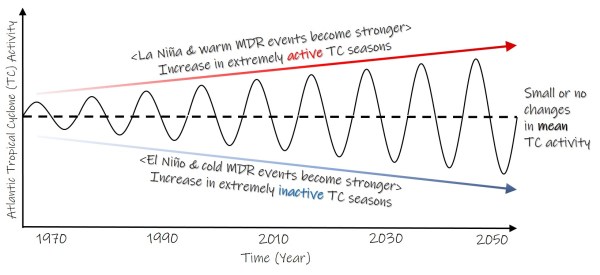
Storm-resolving climate models project a 36% increase in the year-to-year variability of Atlantic hurricane activity by the 2050s
Tropical cyclone (TC) activity results in substantial loss of life and property damage. While the Atlantic basin has experienced a pronounced increase in accumulated cyclone energy (ACE) and the number of TCs over the past 50 years, TC-resolving climate models project a slight decrease in TC frequency throughout the 21st century (e.g., Roberts et al.,... Continue Reading →
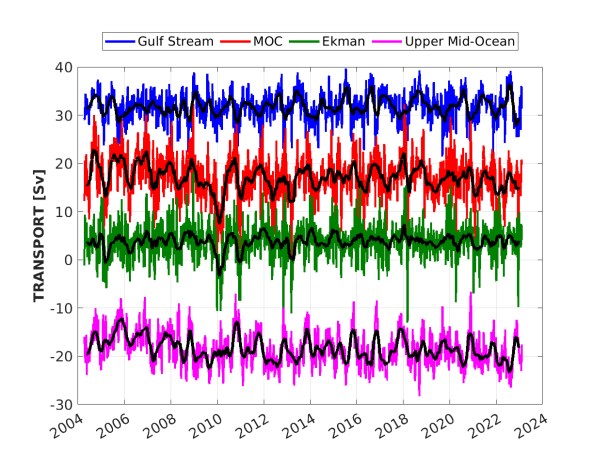
The annual mean AMOC in 2022 is the lowest after its biggest drop in 2009
Scientists have been monitoring the Atlantic Meridional Overturning Circulation (AMOC) at around 26.5°N since April 2004 through the RAPID/Meridional Overturning Circulation and Heatflux Array/Western Boundary Time Series moored array (RAPID). The newly released RAPID dataset fully incorporated a recent geomagnetic correction of the submarine cable measurement of the Florida Current transport, a critical component of... Continue Reading →