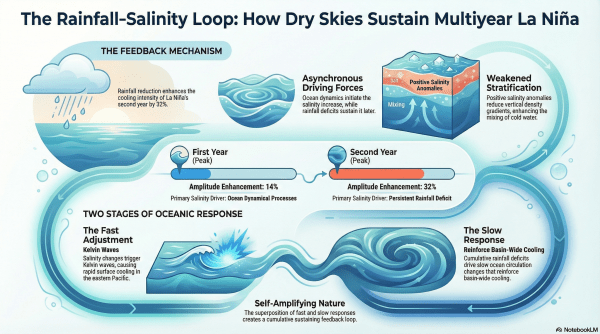
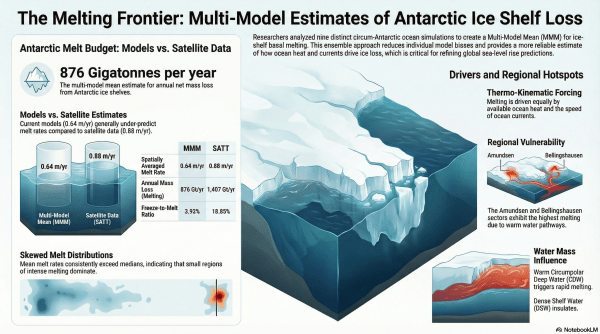
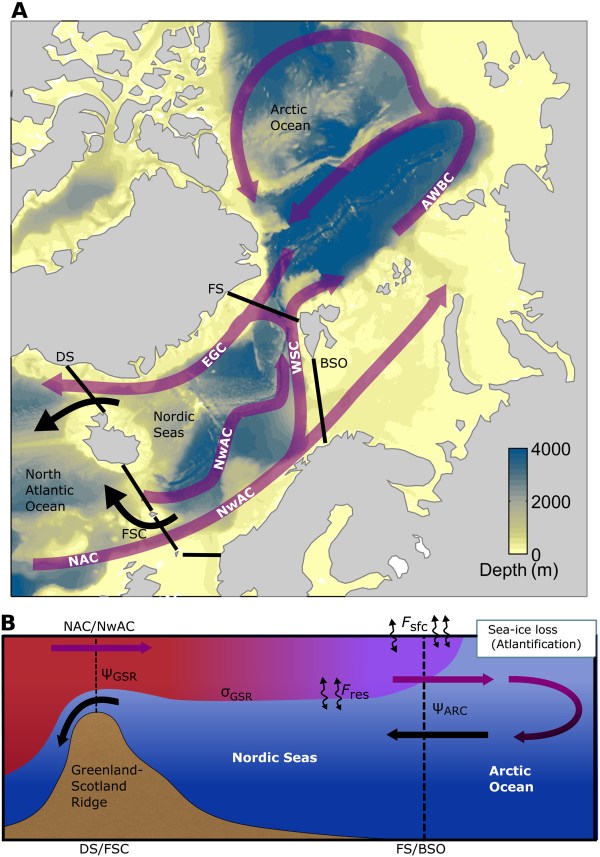
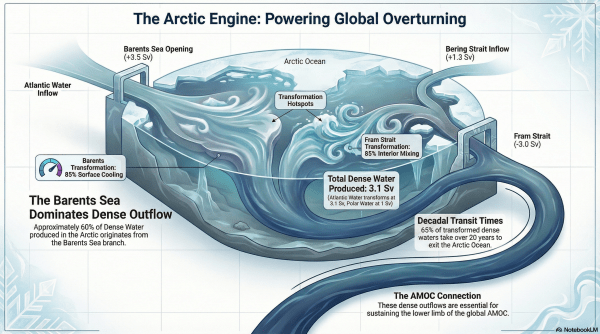
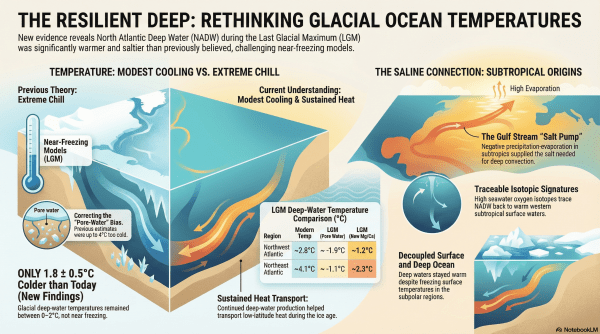
I usually spend about 10 ~ 20 minutes every morning for literature review before I start my daily routine. Sometimes, a paper looks very interesting, but requires me to spend more than 10 to 15 mins to be able to understand the main takeaway. This is particularly true for those papers with long abstracts and... Continue Reading →
Simulating the AMOC with MOM6 on a $300 Chromebook Plus … and also learning Python
For several years, I have been trying to find time and energy to learn GFDL's Modular Ocean Model version 6 (MOM6), and Python program language. Finally, I have the time and energy to do so. However, I don't have High Performance Computing resources available to me. So, I had no choice but to work on... Continue Reading →
Seasonal outlook of hurricane activity for five North Atlantic sub-basins
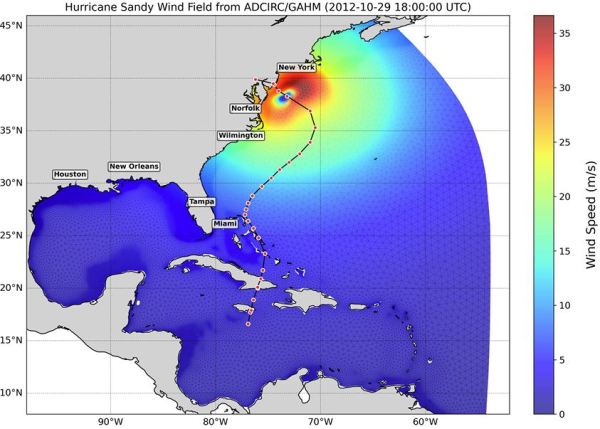
Seasonal hurricane outlooks, such as those issued by NOAA's Climate Prediction Center, Colorado State University (Klotzbach et al., 2017), European Center for Medium-Range Weather Forecasts, and University of Arizona (Davis and Zeng, 2019), produce skillful (i.e.,. better than climatology) seasonal forecasts of overall North Atlantic tropical cyclone (TC) activity. Such forecasts are possible because seasonal... Continue Reading →
Synergy effect of warm Atlantic-Pacific on the longest-lasting 2023 western North American heat wave
The southwestern United States (US) and Northern Mexico experienced their longest stretch of record-breaking heat wave in the summer of 2023 from mid-June to early August, affecting over 100 million people, causing over 200 deaths, and $14.5 billion in economic loss. In Phoenix, Arizona, for example, the heat wave lasted for 31 days from 30... Continue Reading →
A two-level wind and buoyancy driven thermocline model by Peter Killworth (updated)
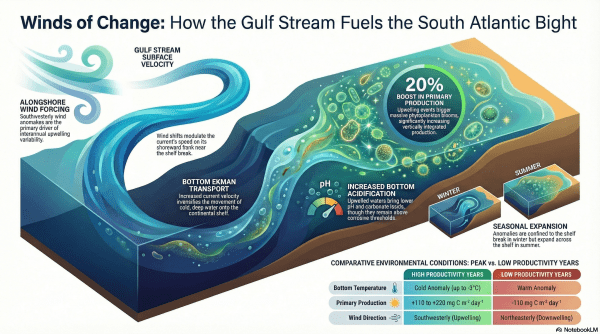
I was discussing with my colleagues about a recent northward shift of the Gulf Stream position and debating why that happened. So, I decided to read again one of my favorite physical oceanography papers "A two-level wind and buoyancy driven thermocline model" by the late Dr. Peter D. Killworth. This paper was published in 1985... Continue Reading →
Onset of 2025 Atlantic Niña and its implication for typhoon landfalling risks in East and Southeast Asian countries
Atlantic Niña is a natural climate pattern characterized by cooler-than-average sea surface temperatures in the eastern equatorial Atlantic Ocean, appearing predominantly in June-August. It is considered the 'cold phase' of the Atlantic Zonal Mode, the leading mode of tropical Atlantic sea surface temperature variability in June-August, similar to how La Niña is the cold phase... Continue Reading →
Onset of 2025 Atlantic Niña: What it means for the Atlantic hurricane season (updated)
Atlantic Niña is a natural climate pattern characterized by cooler-than-average sea surface temperatures in the eastern equatorial Atlantic Ocean. It’s considered the 'cold phase' of what oceanographers call the Atlantic Zonal Mode, similar to how La Niña is the cold phase of the El Niño-Southern Oscillation (ENSO) in the Pacific. Looking at the latest NOAA... Continue Reading →
AI’s summary of the signal-to-noise paradox related to the NAO
I asked Gemini (Flash 2.5) about the signal-to-noise paradox regarding the North Atlantic Oscillation, which is one of the emerging new ideas (or concepts) in climate research. Here is the reply. Yes, I am familiar with the signal-to-noise paradox, especially as it relates to the North Atlantic Oscillation (NAO). It's a significant and intriguing challenge... Continue Reading →
Future strengthening of the Antarctic Slope Current and its potential implications for global sea level rise
The Antarctic Slope Current (ASC) is the westward-flowing coastal current system around Antarctica, largely driven by easterly winds. It serves as a barrier to heat and salt exchanges between the cold, fresh Antarctic ice shelf region and the warm, salty Circumpolar Deep Water (CDW) in the Southern Ocean. A weakening of the ASC allows more... Continue Reading →
A note on the potential AMOC collapse for nonexperts
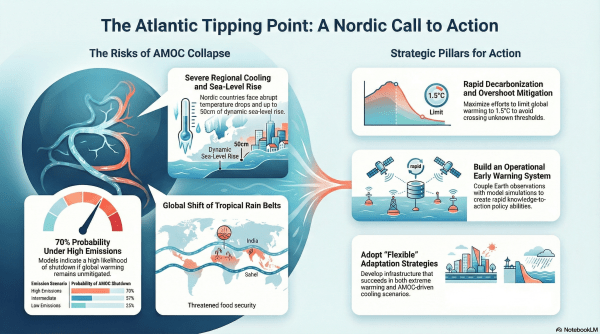
As the Earth warms due to anthropogenic climate change, sea- and land-based ice melts, adding buoyant freshwater to the surface of the high-latitude North Atlantic and thus decreasing salinity. This makes the surface water lighter reducing the sinking of the surface water and thus the AMOC. However, the amount of added freshwater is not enough... Continue Reading →